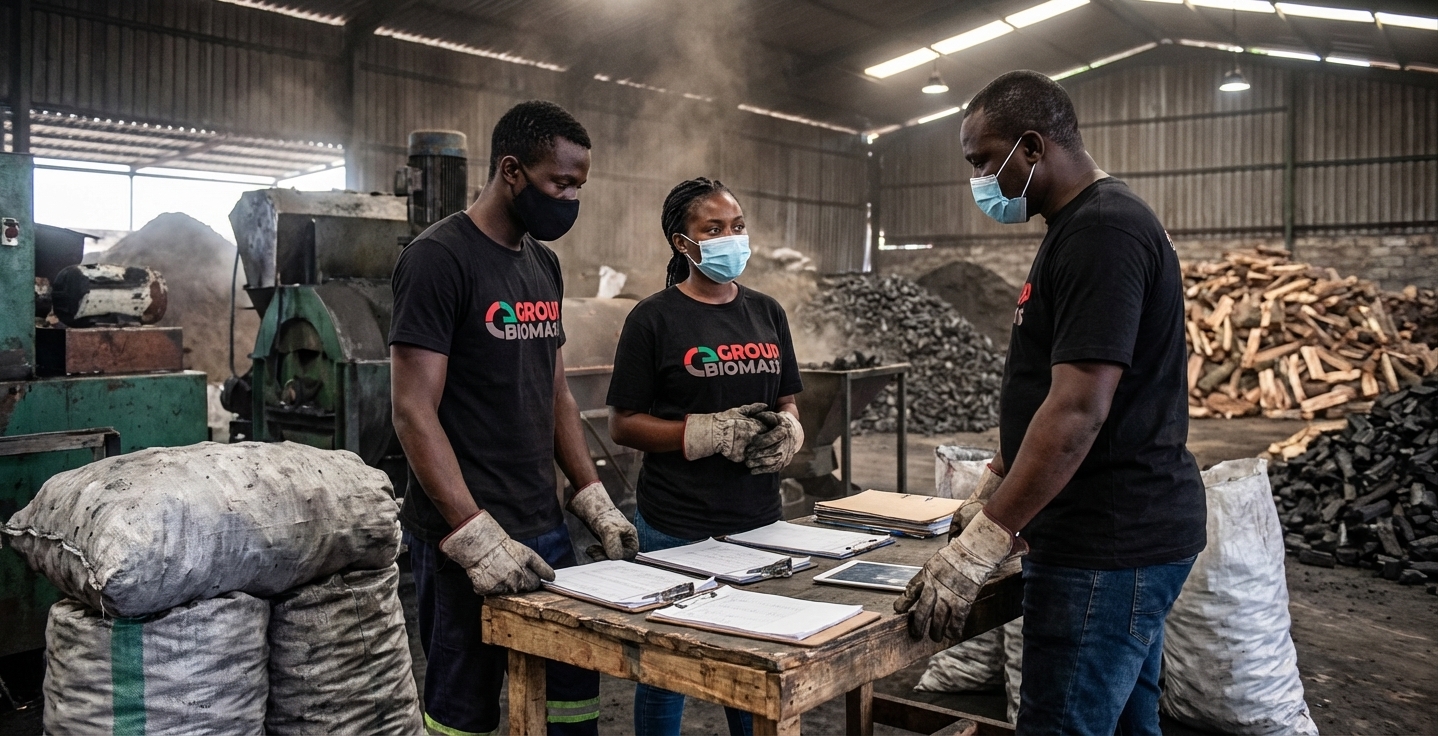
Deep within the country, a massive facility stands as a representation to the rising demand for charcoal . This industrial complex, reportedly the nation’s largest wood plant , is raising attention for both its output and the possible environmental ramifications. While offering employment for nearby communities, the operation’s activities are triggering questions about sustainable forest management and the overall well-being of the nation's natural resources.
Premium Briquet Carbon Export Boom: The Rising Nation
Cameroon is experiencing a substantial surge in hardwood lump carbon sales, positioning itself as a key player in the global industry. Thanks to expanding demand from the United States and Asian regions, the country’s supply of this eco-friendly fuel is steadily growing, offering promising more info prospects for regional populations and boosting the regional economy. The emphasis on environmentally friendly timber lump charcoal is proving to be a major aspect in securing international customers.
Inside Cameroon’s Hardwood Lump Charcoal Factory: Production & Sustainability
Stepping into a typical Cameroon hardwood lump charcoal factory reveals a surprisingly straightforward system of creation. Green wood, often obtained from sustainable woodlands, are carefully cut and transported to a kiln. Within this area, the timber is slowly burned with minimal oxygen, a method that transforms it to piece charcoal. Although the established methods used can be labor-intensive, more modern factories are incorporating improved techniques and pursuing methods to boost both efficiency and ecological conservation. This covers investing in green energy and introducing rigorous debris control .
The Lump Charcoal Trade : A Significant Player in Worldwide Exports
Despite mounting environmental concerns , Cameroon’s lump charcoal trade remains a surprising but vital role in the global sales landscape. The creation of charcoal from forest biomass is a important source of income for thousands of Cameroonian communities, particularly in underserved areas . This practice generates a substantial volume of charcoal shipped for foreign markets , often fueling cooking needs in other countries , though this reliance creates challenges relating to forest loss and responsible forest protection.
Le Contre Charbon de Bois En Bloc de Bois et Des Briquettes : Une Point de Vue Camerounaise
Dans le Cameroun , le choix face à le charbon de bois en bloc et les briquettes interroge une question . Classiquement, , le charbon de bois a toujours été utilisé en son arôme typique et sa aptitude à créer une température forte, idéale pour la rôtisseries locales . Toutefois, les briquettes , davantage disponibles à acquérir et moins chères , gagnent en popularité , particulièrement auprès les zones citadines .
Green Charcoal Creation : The Future of Cameroon Forest Industry
The conventional method of charcoal production in Cameroon presents a major challenge to its valuable hardwood woodlands . However, new sustainable approaches offer a promising path forward. These encompass technologies like wood waste processing and kiln-less earth kilns , which reduce deforestation, lower emissions, and offer economic opportunities for local villagers. Embracing these sustainable alternatives is crucial to safeguarding Cameroon's precious heritage and ensuring the long-term future of its hardwood industry while addressing climate concerns.
Comments on “ Cameroon's Biggest Unveiling the Country's Largest Wood Factory ”